
Dear friends,
I hope you are well. I am two weeks into travelling and I have fallen in love. Now before you panic and think I’m not coming back, because I have secretly eloped with someone. It’s a place. I am in love and thoroughly enchanted by Jardín, Colombia, which is where I am writing this from.
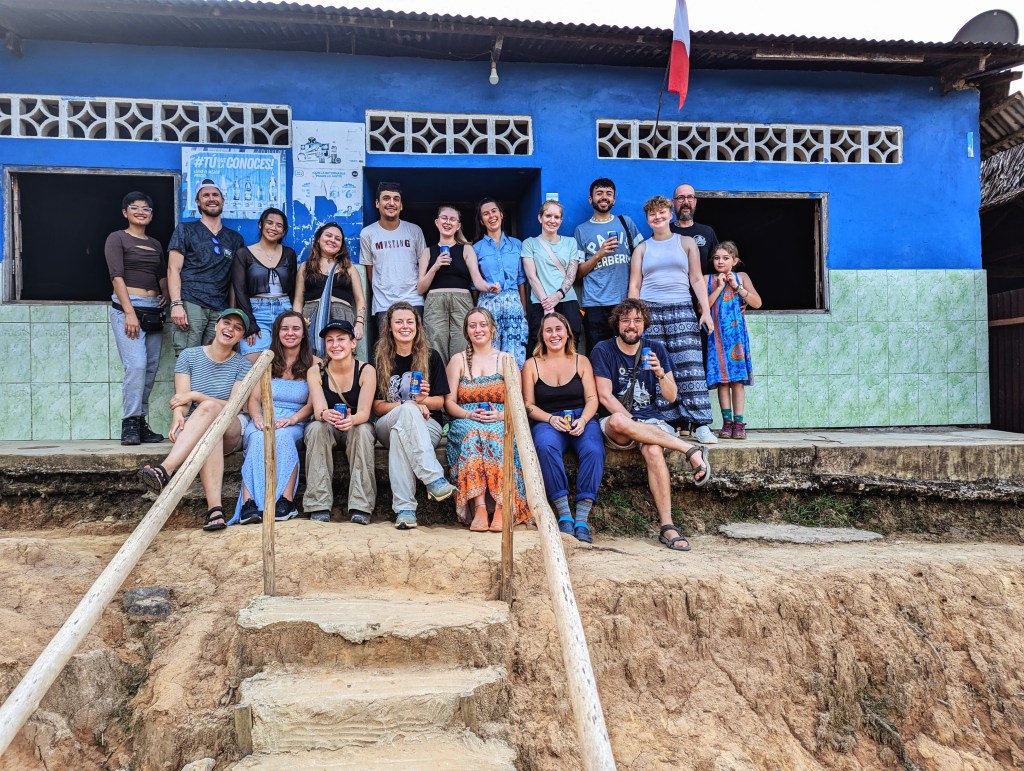
But let’s start from the beginning. I said goodbye to RAREC (and the monkeys, which heartbreakingly and emotionally somehow knew it was a goodbye) and Iquitos on the 31st of July (nothing much exciting happened in my last two weeks). We went to the “pub” and then I stayed in a colonial hotel, said goodbye to some close colleagues and started my adventure. Although not without a tuk tuk driver trying to scam me out of 5 soles, like a common tourist. I laughed in his face and he took me to the port for the correct price.
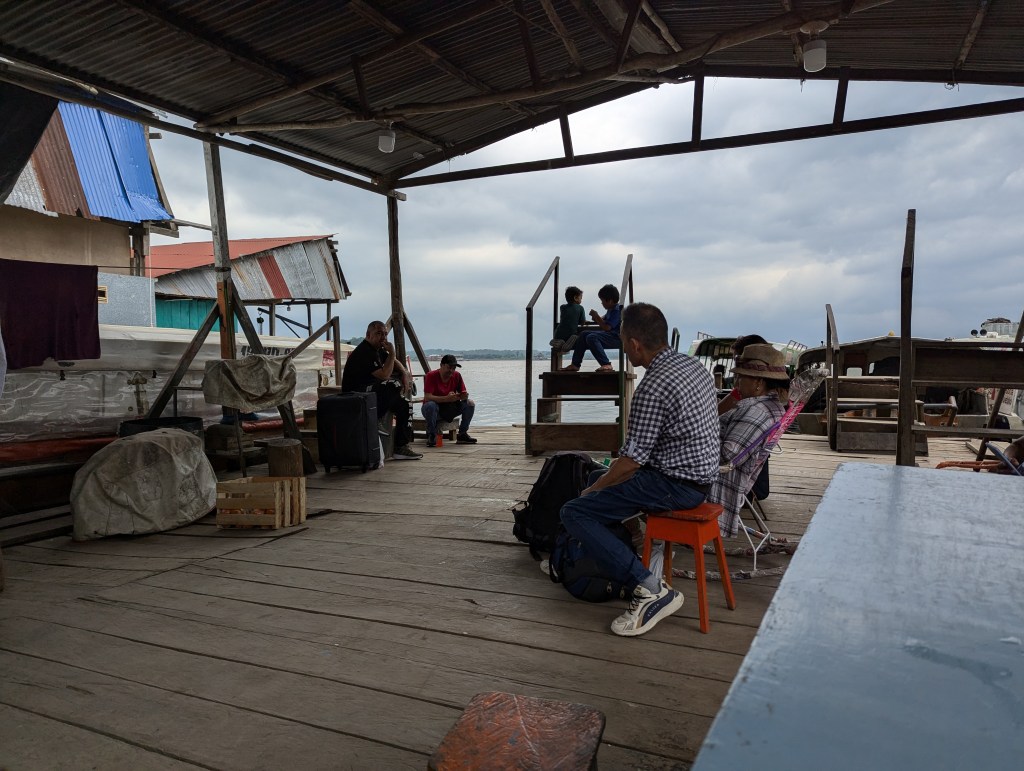
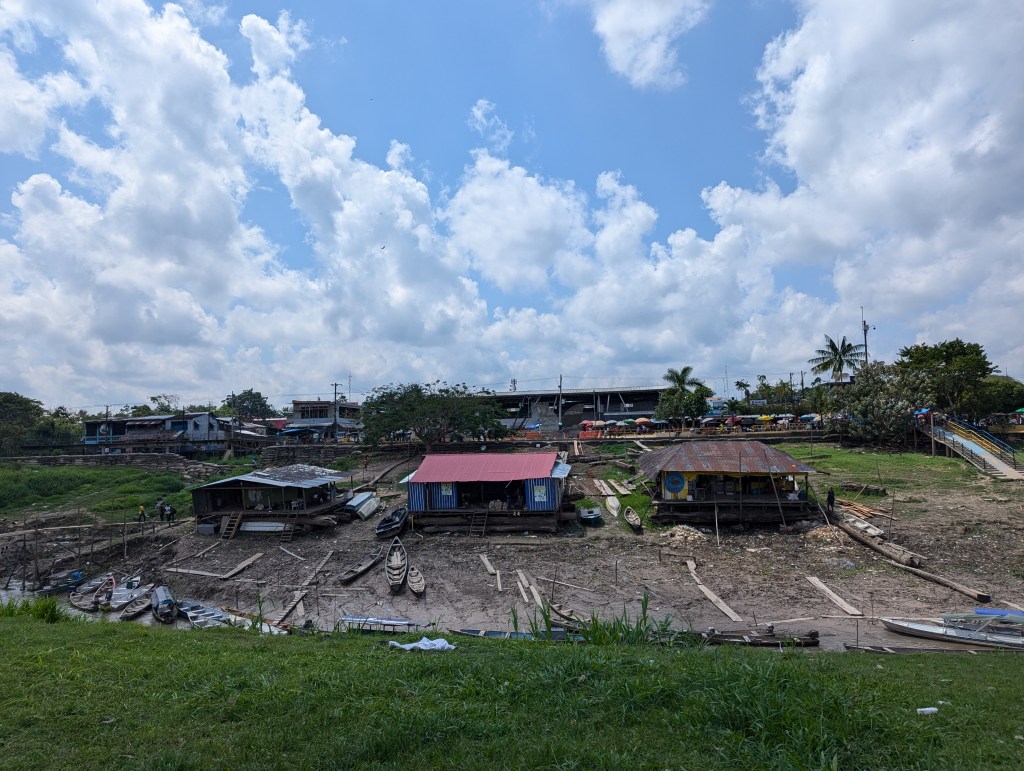
My adventure started quite soggily, while waiting for the boat up the Amazon to Leticia. The town in Colombia that borders, Brazil and Peru. I knew the boat, having seen photos and known someone to travel on it, is fairly fancy. And by that I mean, unlike most boats in Iquitos, not a wooden canoe with an outboard motor, usually being bailed out as it goes along. So, I incorrectly assumed, and having lived over 10 months in Iquitos, I should have known better, that the port would also be fairly fancy. It was not. I sat on, what I can only describe as a barely floating wooden pontoon, as a tropical storm roared around us. So much so, everyone waiting had to huddle together in the center of the rocking, slippery, wood surface as rain poured so hard that rust rained down on us from the corrugated iron roof and the horizontal rain attacked us from all angles, soaking us, and our luggage, through. However, eventually, two hours behind schedule (but at least that gave us the chance to dry out) we boarded and set off on the 12 hour overnight boat to Santa Rosa. 14 hours later, I arrive to another floating pontoon in the middle of the river, where I had to catch a boat (wooden canoe, outboard motor, bailing water out one) to Santa Rosa and then a tuk tuk to the Peru border control to stamp me out. To then catch a tuk tuk back and another canoe to the Colombian border control to stamp me in. Thankfully the Colombian control was at least a floating building on the river, so was a lot easier to get to.
From now on I will split the paragraphs into places…
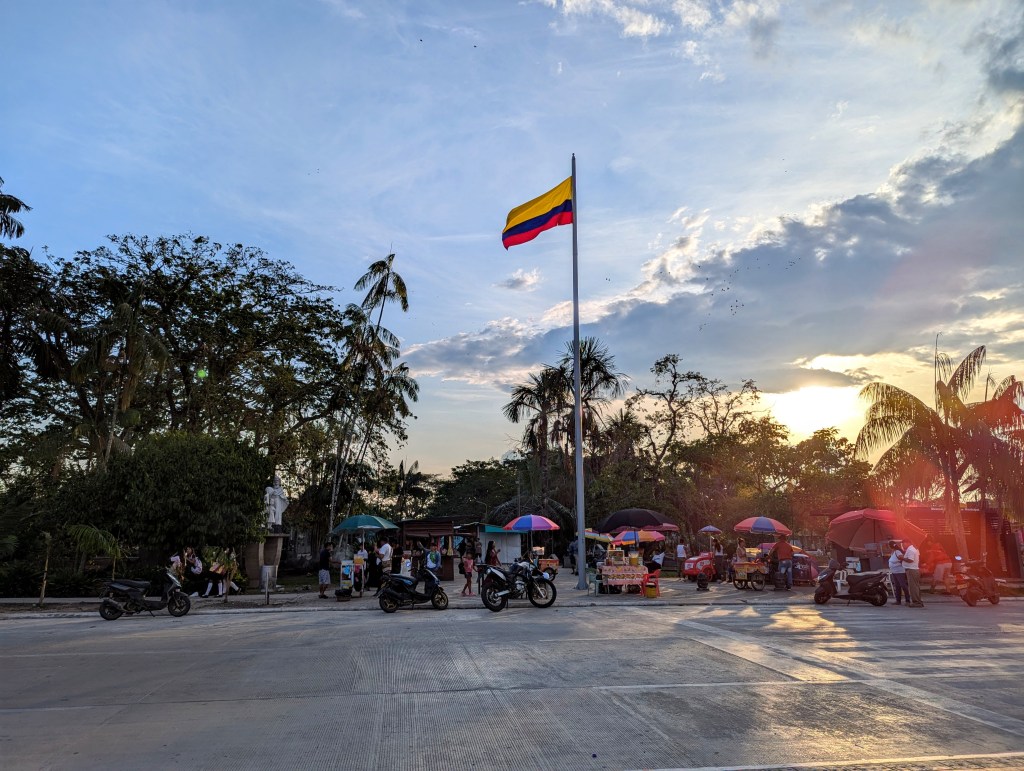
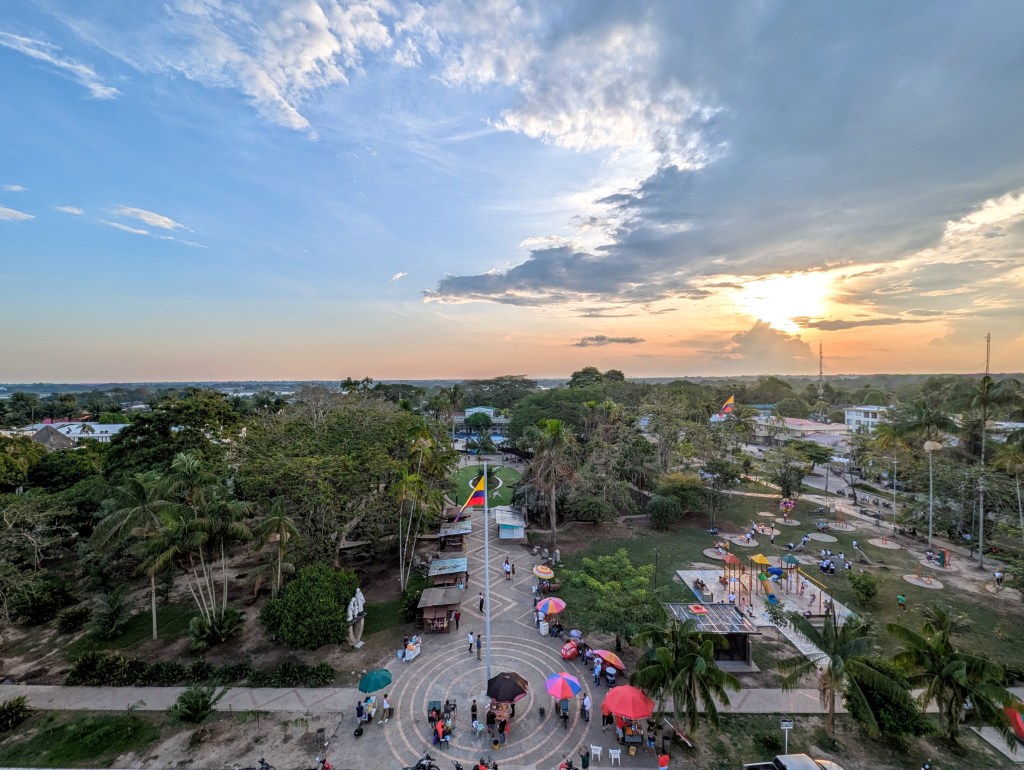
LETICIA: Leticia, was actually much nicer than I expected, having been expecting a smaller Iquitos. But it was quieter, cleaner and a lot greener. Although, one of the parks, that is famous for hundreds of parakeets roosting in it, smelt so bad that I had to hold my breath walking past it… on the opposite side of the road. It still made my eyes water. I went to the ethnographic museum (also much better than Iquitos’), and just generally wandered around (I could have walked across to Brazil, but decided not to) until 5pm when I went to watch the parakeets roosting in the smelly park. I climbed the church tower and contemplated why Iquitos didn’t have the same spectacle, coming to the realisation that Iquitos doesn’t have any trees! I hadn’t realised until that moment, that even the main squares in the town lack planting, and therefore birds.
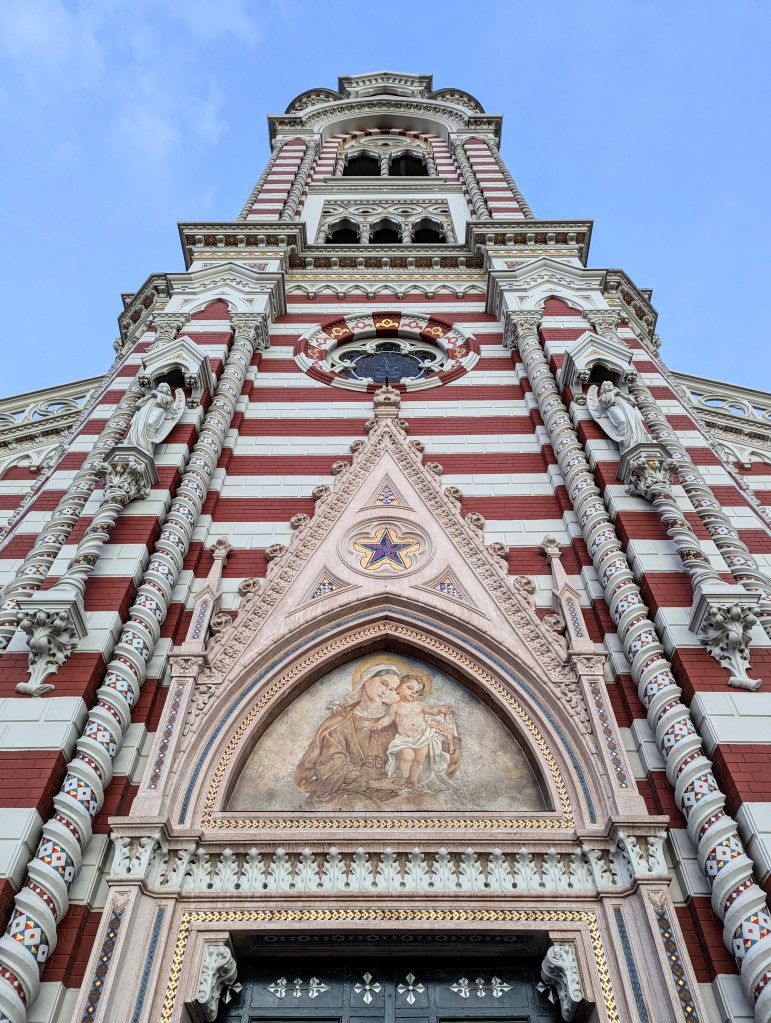
BOGOTÁ: I did not like Bogotá. It is enormous, with 12 million inhabitants, at least 6 million cars and about 24 million people’s worth of garbage and graffiti. Not pretty street art graffiti, just ugly tags and criminal damage graffiti, even on monuments, fountains and listed buildings. Although I was pleased to see a lack of paint on the most beautiful church I have ever seen. Nicknamed the candy cane church for its stripes, I regretfully never managed to find it open to look inside. But if the outside was anything to go by, it would have been magnificent. Look at the beautiful mosaics up the spiral pillars!
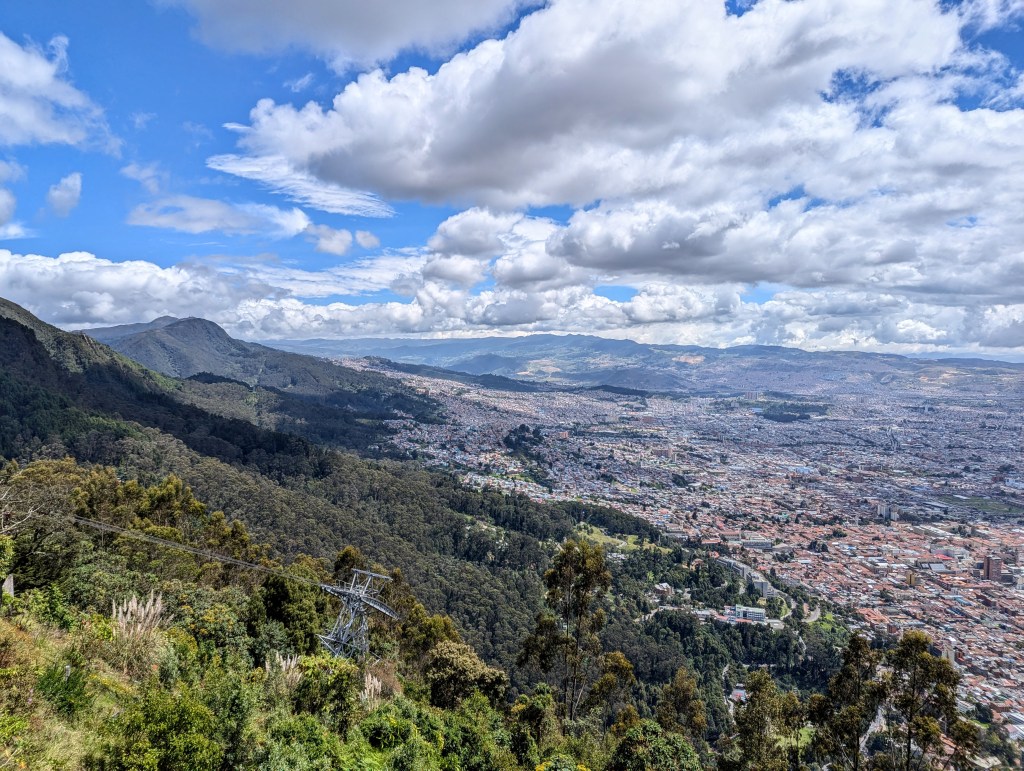
Bogotá was overwhelming and probably not the most sensible first stop for someone re-entering society after a year in the jungle… I didn’t like my first hostel, so changed (to much nicer one), made a mistake ordering an Uber to the wrong address (which only cost me time and money), and just felt very despondent about the whole idea of traveling for the next 6 weeks. Even the day trip I had planned was incredibly expensive for no particular reason and I spent most of the day, hangry. My trip up the Monseratte was stressful and surrounded by at least 2000 other people.
However, I did enjoy visiting the Guatavita lake part of the trip. The origen of the El Dorado legend! The day before I had visited the gold museum and discovered that indigenous people used to sail into the lake on a raft (of bamboo, not gold) to offer gold and emeralds to the mother earth. On the trip I was told that it was to “coronate” a new chief. This chief had spent 9 years in a dark cave, not seeing sunlight, to then have to pass a test of caring for a fire for 3 days, not getting distracted, despite the naked women dancing around him. Once he passed, he was taken, naked, onto the lake before sunrise, adorned with gold jewelry and covered head to toe in gold dust, so when the sun rose and the rays hit him, he seemed made of gold. He would then bathe in the freezing lake and offer all gold to the water. To return to shore and his new wife (one of those lucky naked dancing women). The meaning behind, lays with the ancient people’s connection to nature. They believed that earth and water were female elements and that the sun, represented by gold, was a male, sign of power. So by covering the new chief in gold dust, he became the seed of the sun, being offered to the female belly of the earth, and the new chief was born. The ordinary people would stand around the lip of the lake (which was much higher then) with their back turned, prohibited from watching the ceremony, until a priest played a flute, once the new chief was out and his modesty in tact. At which point the common people could turn around and offer their gold to the edge of the lake. Remember this point for later. Further evidence of their connection to nature, comes from their indigenous religion, in which they believed that a species of tree called, Guayacán, held the world up, and therefore to pray, they used to hug the tree so their prayers reached their god.
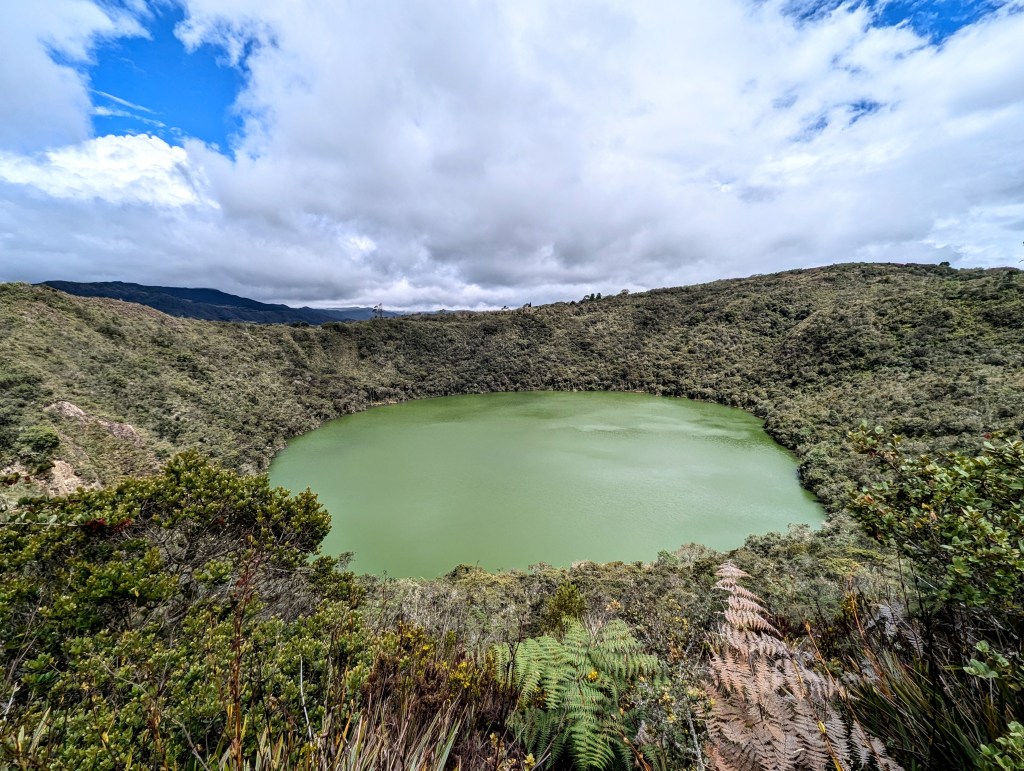
Fast forward to the Spanish arriving and the search for El Dorado. A Spanish officer betrayed an indigenous woman’s love and tricked her into revealing the location of the lake. He then ordered slaves to manually empty the lake with bowls and, surprisingly albeit horrific to think about, managed to drop the level of the lake by about 5m to discover 10,000 gold pieces! Back in Spain it was revealed that actually most of the pieces were 90% copper with a gold layer on the outside. This is because gold (representing men, remember) controlled women and protected them. However, copper, representing women, gave shape to the gold/men. Anyway, greed of man still persisted, even for copper, and the Spanish, and of course, British, came back and dynamited the lake, so now it is only 2/3 full. They never drained it completely though as the task took too many lives. So think of the amount of gold still left at the bottom!
p.s they also chopped all the Guayacáns down to force the covertion to Catholicism.
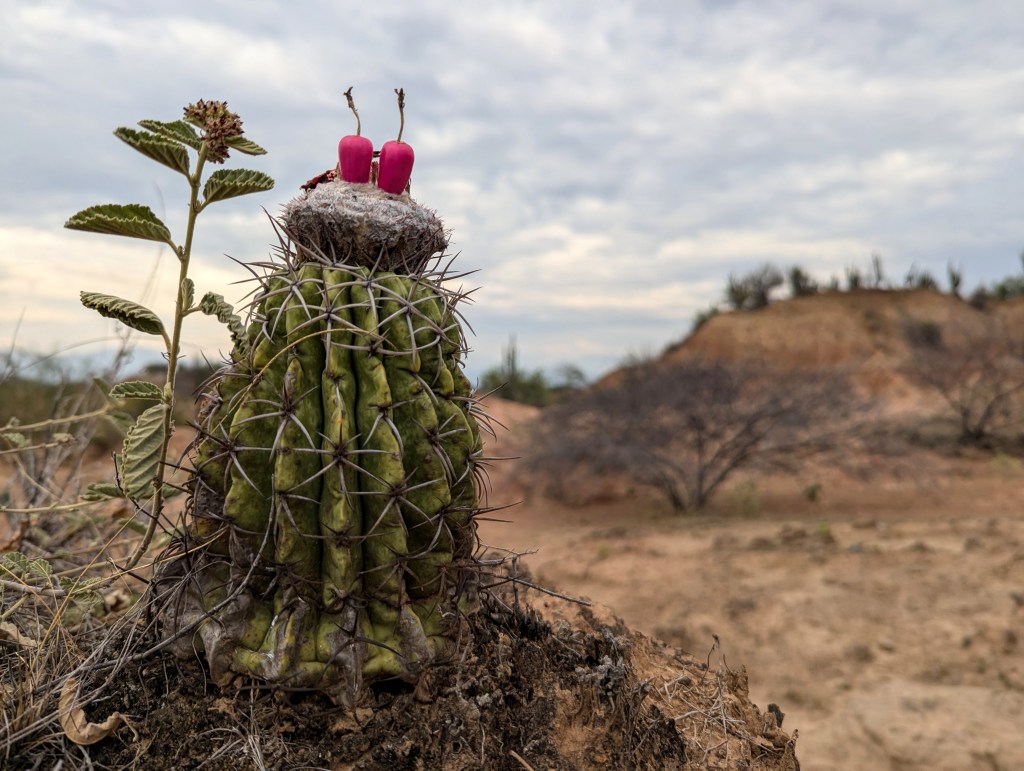
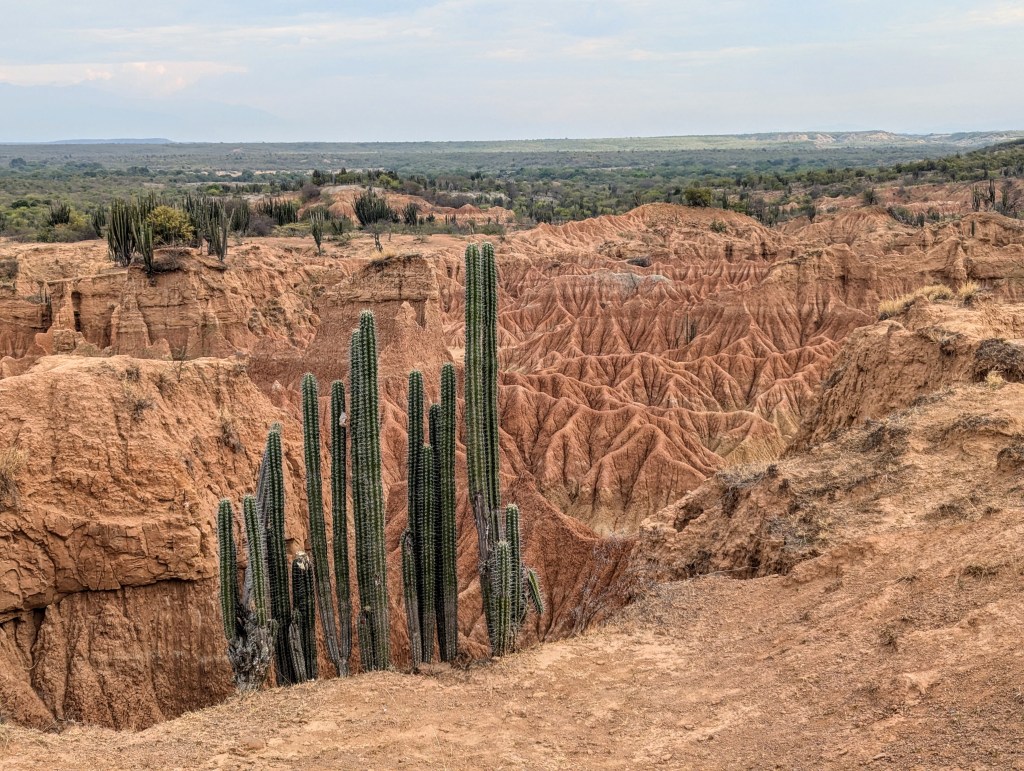
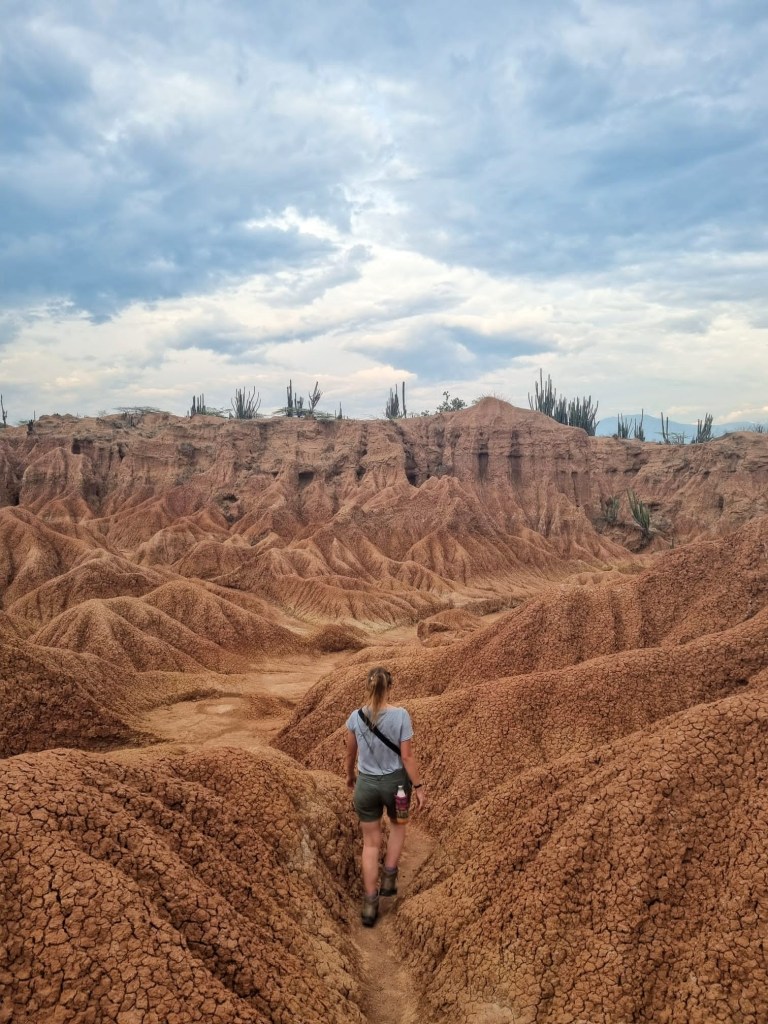
TATACOA DESERT: The desert, the red one in particular, was amazing and totally worth the 14 hour round trip by coach to get there. When hiking in the grey desert (at midday! – blame the tour guide) I could quite imagine how quickly a desert could kill a person, it was hot. The little cactus (mother in law’s pillow) fruit called sweet chillies, gave some sweet relief but I was nearly throwing up by the end of the meagre 4km walk. But was much revived after lots of water, and the most delicious potato I have ever eaten. I will forever remember that potato and add it to the list of foods that I have discovered in other counties that I will never be able to eat again in the UK. The red desert, thankfully walked at 4pm, so much cooler, was like stepping onto another planet. Utterly stunning. I wished I was talented enough to paint landscapes because it was inspiring and I wish I could have captured it on paper. Unfortunately, it was cloudy so we didn’t get the unpolluted nights sky. But I did get to see lots of iguanas, caiman and some burrowing owls, so I was happy.
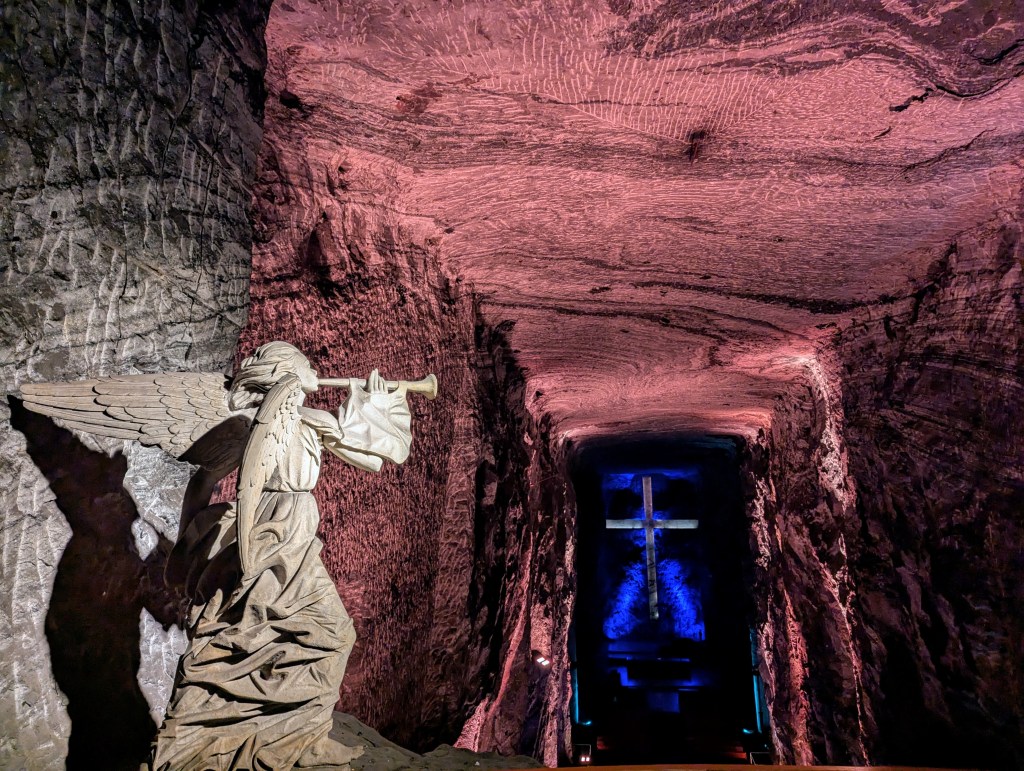
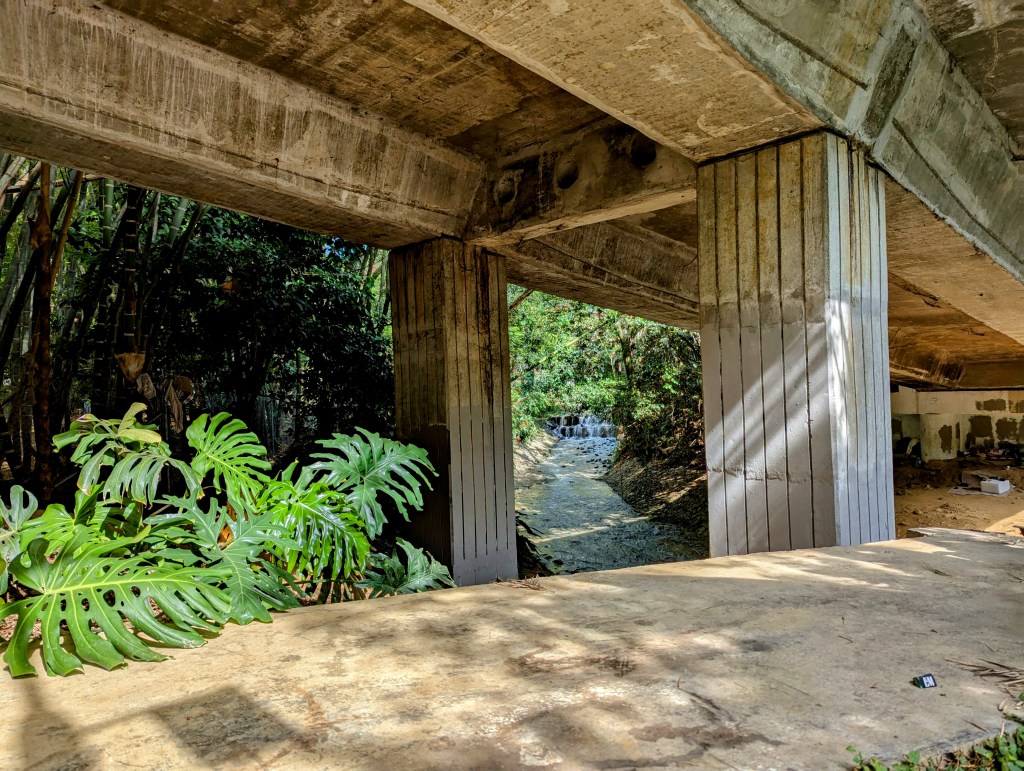
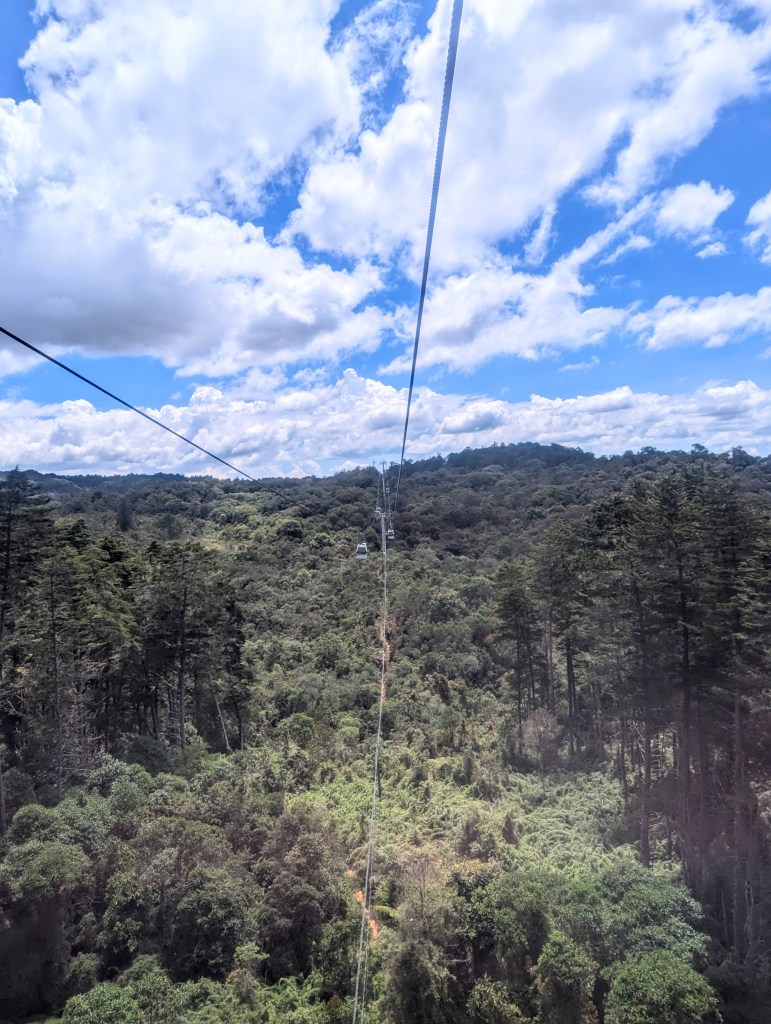
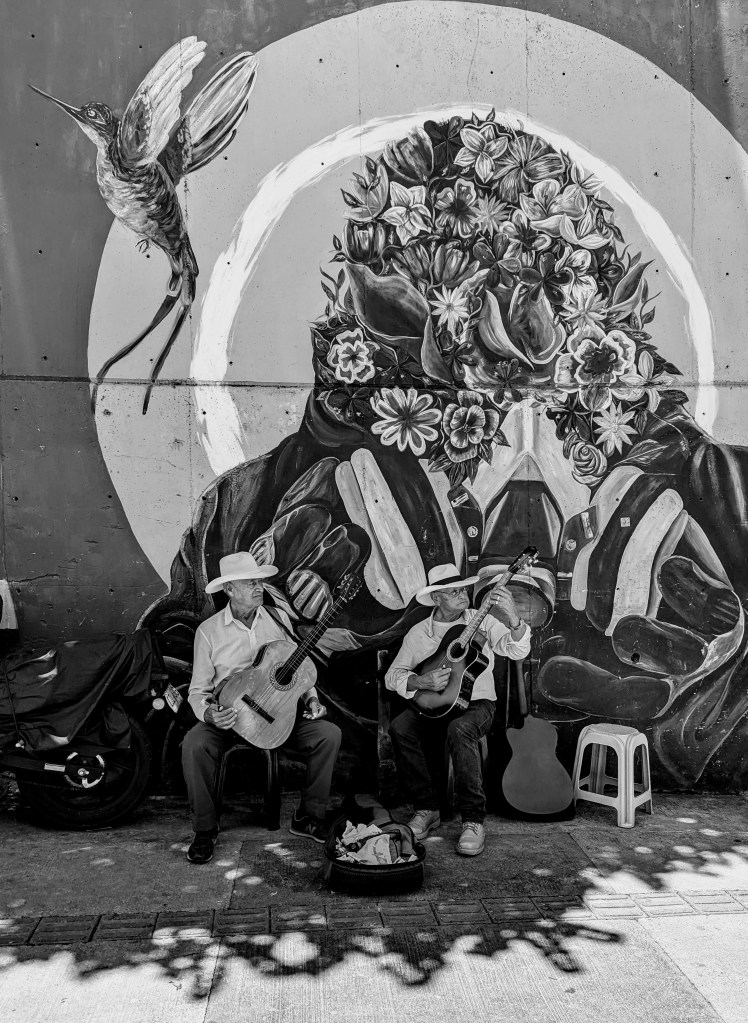
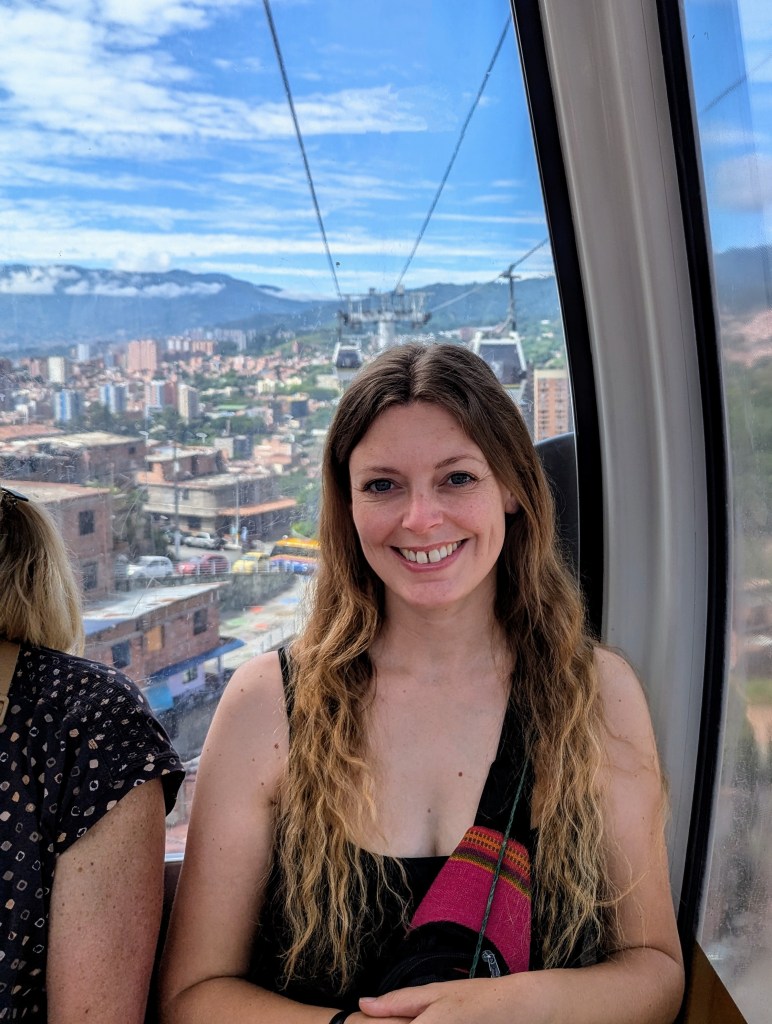
MEDELLÍN: As soon as I left the airport I felt Medellín was much nicer than Bogotá. It was green. The taxi took me through a lush landscape into a city that perfectly merged and graduated into the natural landscape around it. And even in the city, it’s like nature is trying to claim it back. Borders of plants separate sidewalks from the road, bridges are surrounded by tropical plants and greenery, and where that’s not possible, the council have had the initiative to create green roofs and walls. Because of that, it feels a much nicer and happier place to be. It is also safer. It also has a public transport system, which cuts down the congestion on the streets, meaning it is quieter, easier to get around, less polluted and just altogether a nicer place to be. It’s not just the metro, Medellín is revolutionary in the fact that the cable car, is not just a tourist attraction, it’s a legitimate way for locals to get around. There are at least 4 cable car lines going to various points in the city, quite literally getting traffic off the street. The most beautiful cable car ride I’ve ever experienced is the one to Parque Arví in Medellín. Fifteen minutes of flying over green forest, gliding through the tree tops. However, not only are there cable cars, there are street escalators. Which can be thanked for the incredible evolution of communa 13, which used to be, as recently as 2002, one of the most dangerous places in the world. Very simply put, after the paramilitary and guerillas were defeated, the escalators enabled locals to get to work and back, and opened up the streets to local artists, which in turn attracted local tourists and then international tourists. Now, it is a thriving community, and although the atrocities are still in living memory, they are proud of the turnaround seen, and this is expressed through street art, all with inner meanings.
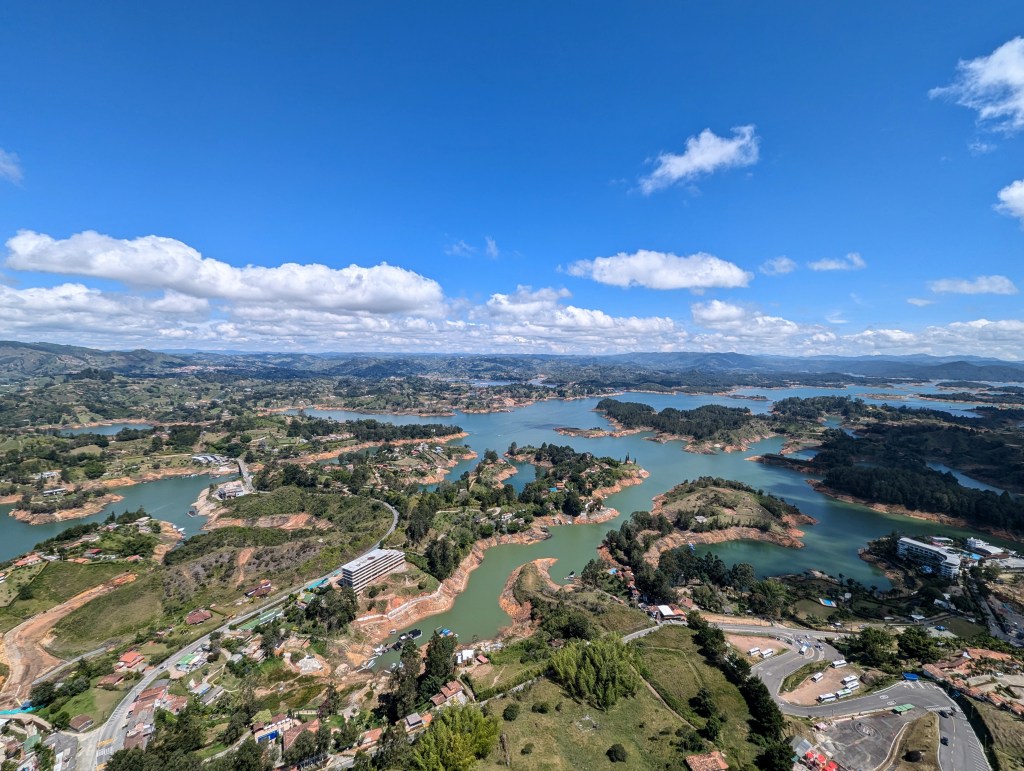
While in Medellín, I also visited Guatapé and la piedra de Peñol. Guatapé is beautiful little town, know for being one of the most colourful in Colombia. Most houses (those that don’t are apparently protesting the government) have a sócalo (a colourful painting/sculpted boarder along the base of the house). Each one will either have the lamb of God, a flower (the same flower means those in those houses are related) or a personal image that means nobody else can have the same. La piedra de Peñol is a big volcanic rock that was pushed up due to tectonic plate movement. Although it was originally thought that aliens or a naughty elf put it there. There are nearly 700 steps to the top, but I was rewarded with a beautiful view (and calf cramps the next day). Peñol itself was a town that was flooded to build the reservoir. Today there is a new Peñol, but the old one lives in people’s memories through a tiny replica of the old village and a big cross in the centre of the reservoir to show where the church used to be. This year Colombia has suffered an incredible drought, so you will see how low the water is in the photos.
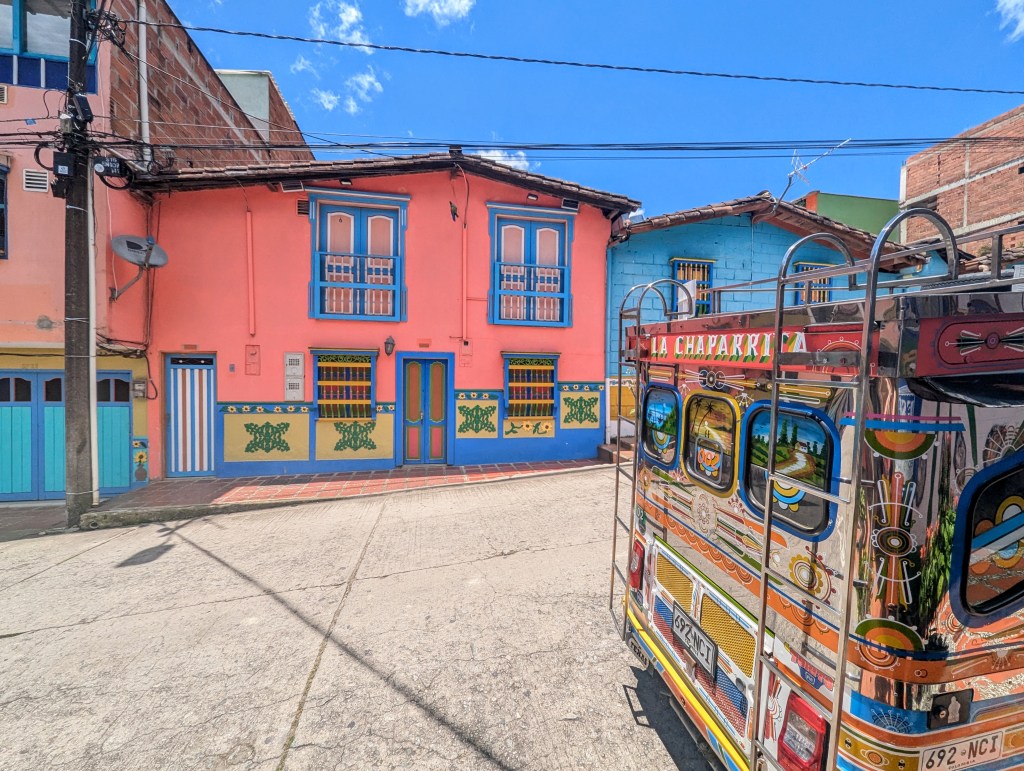
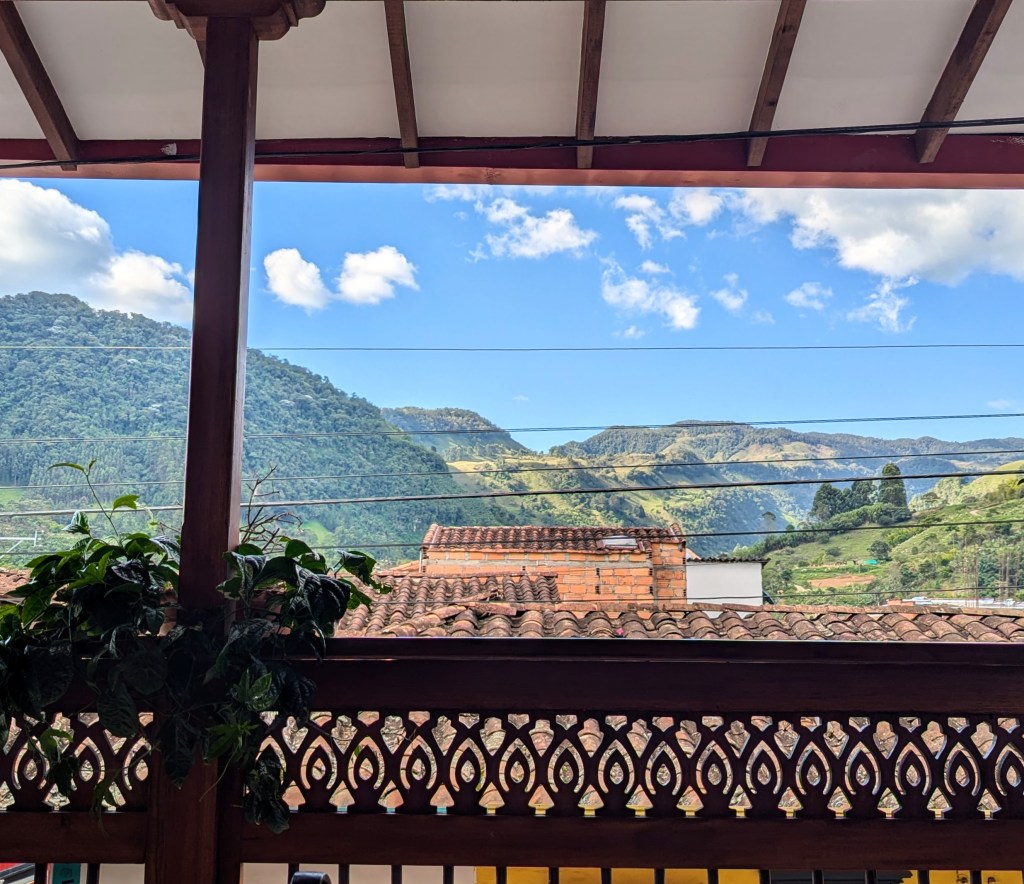
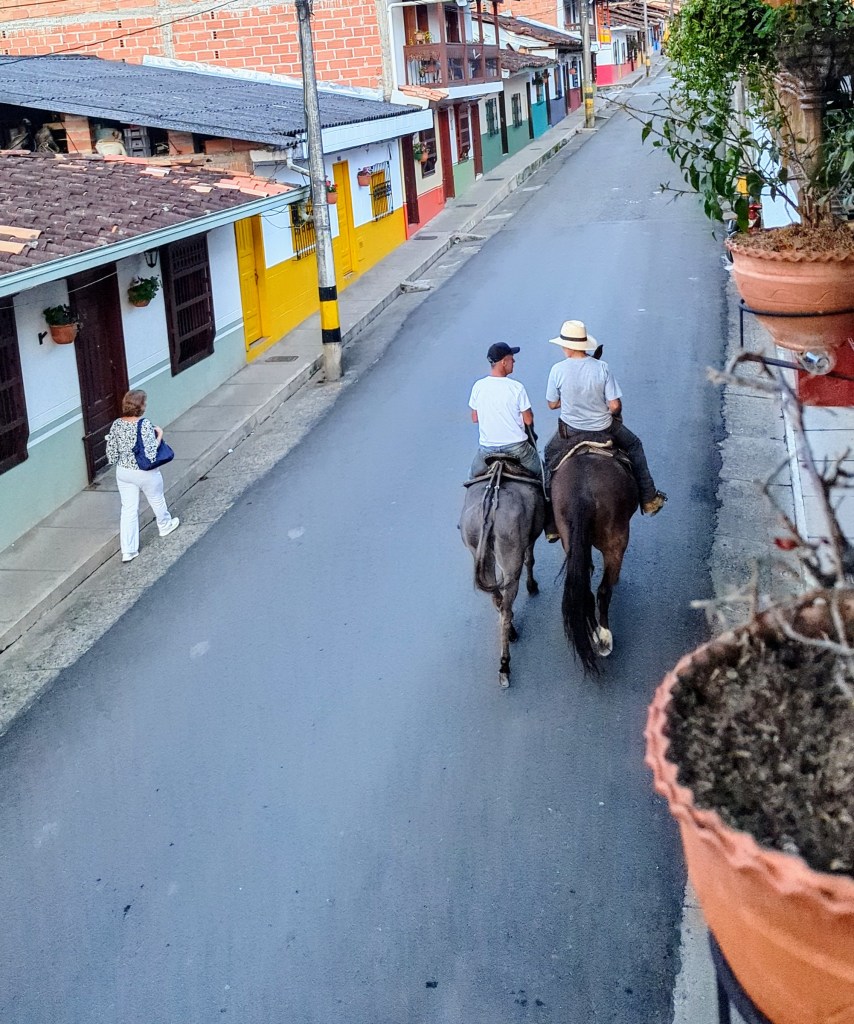
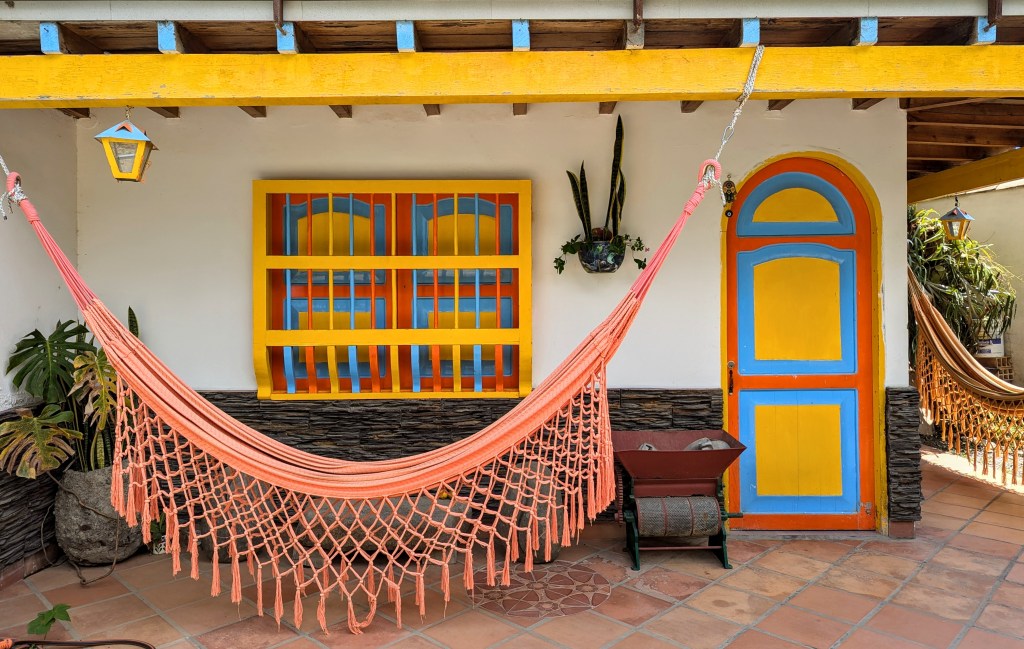
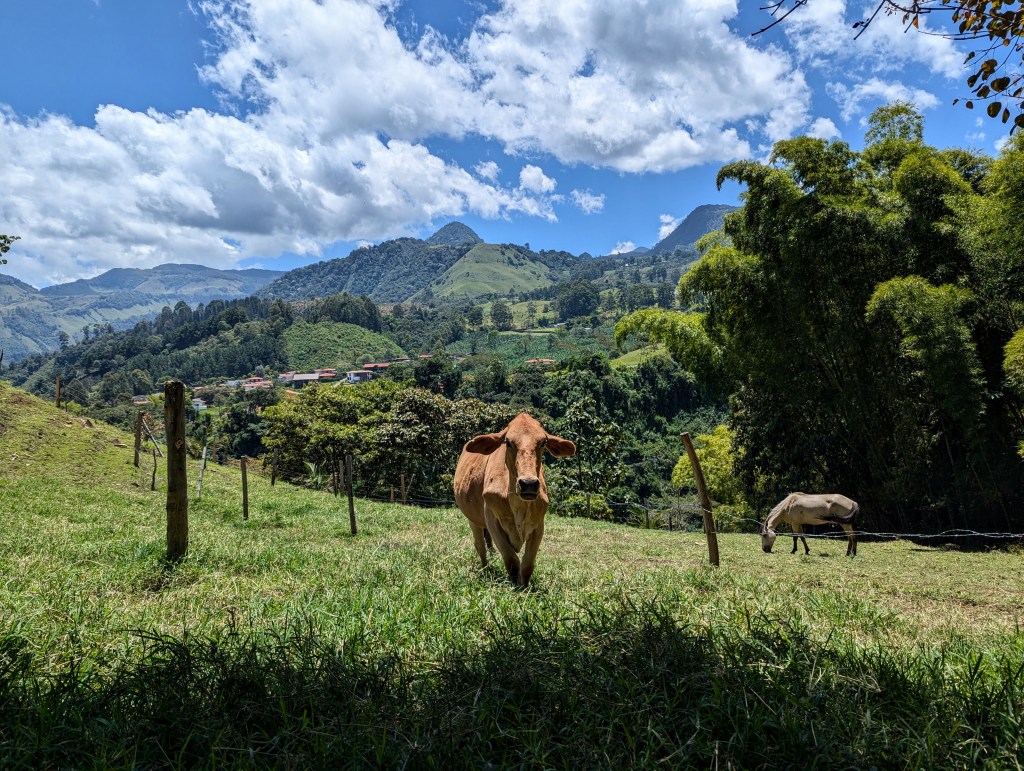
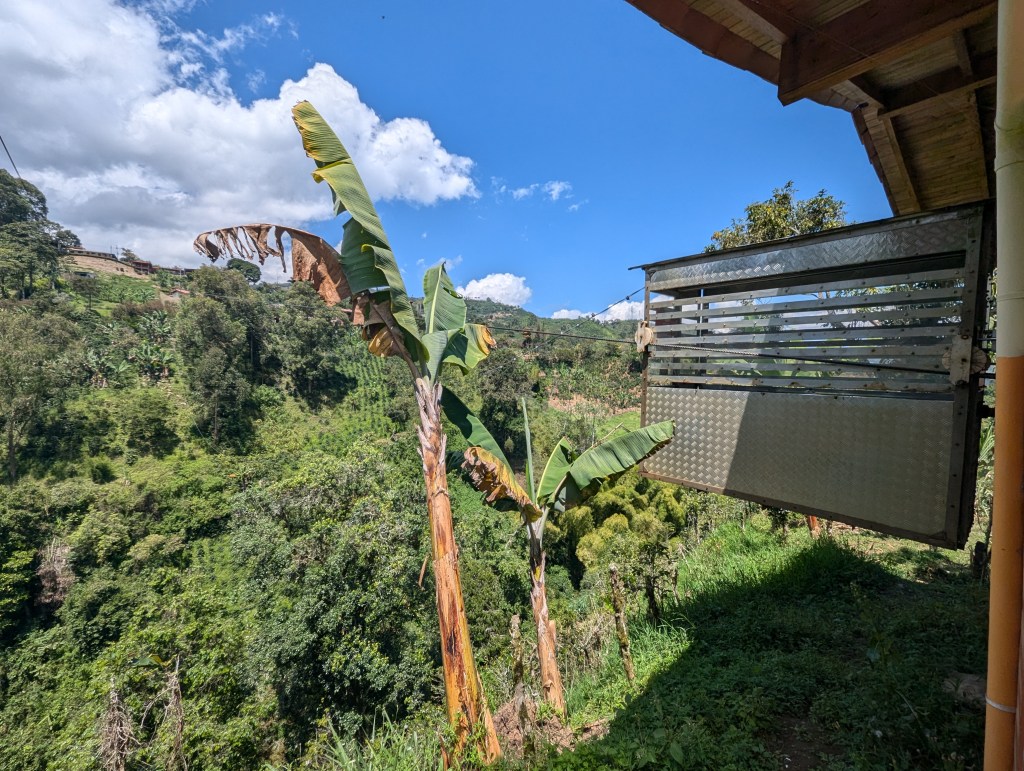
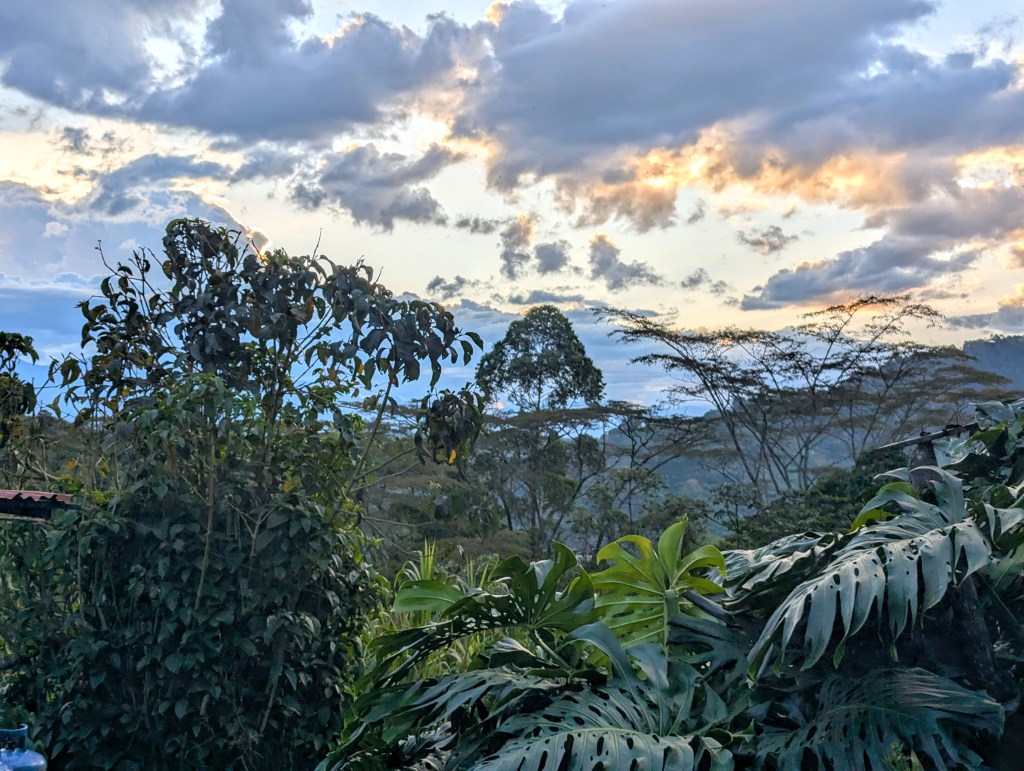
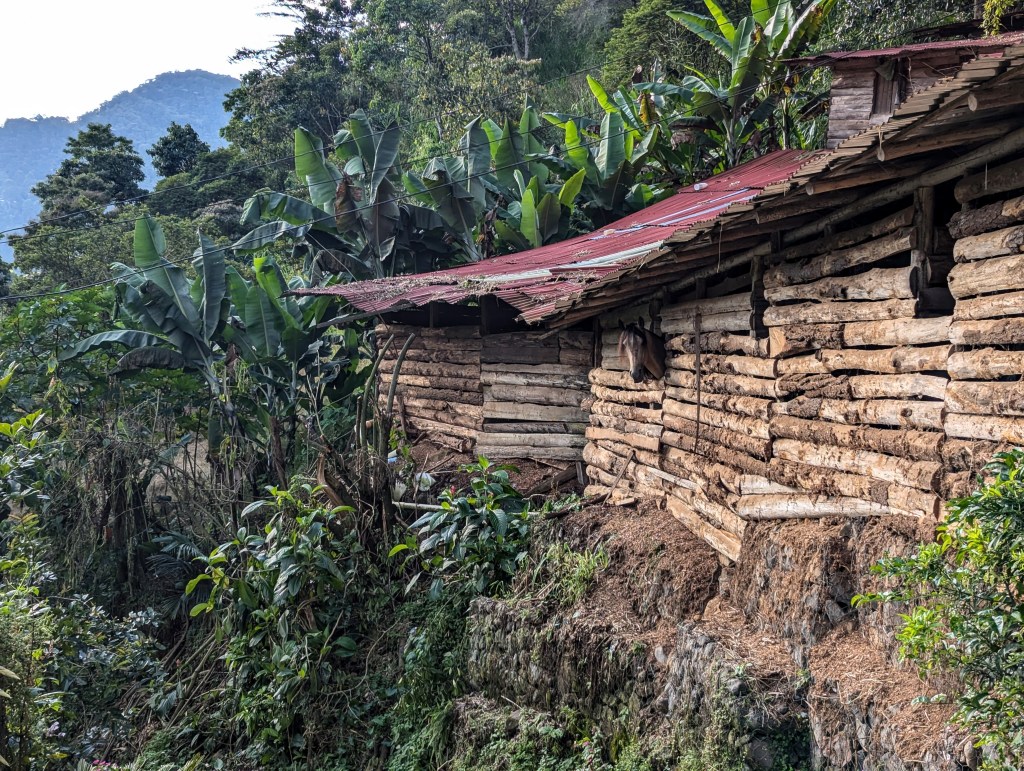
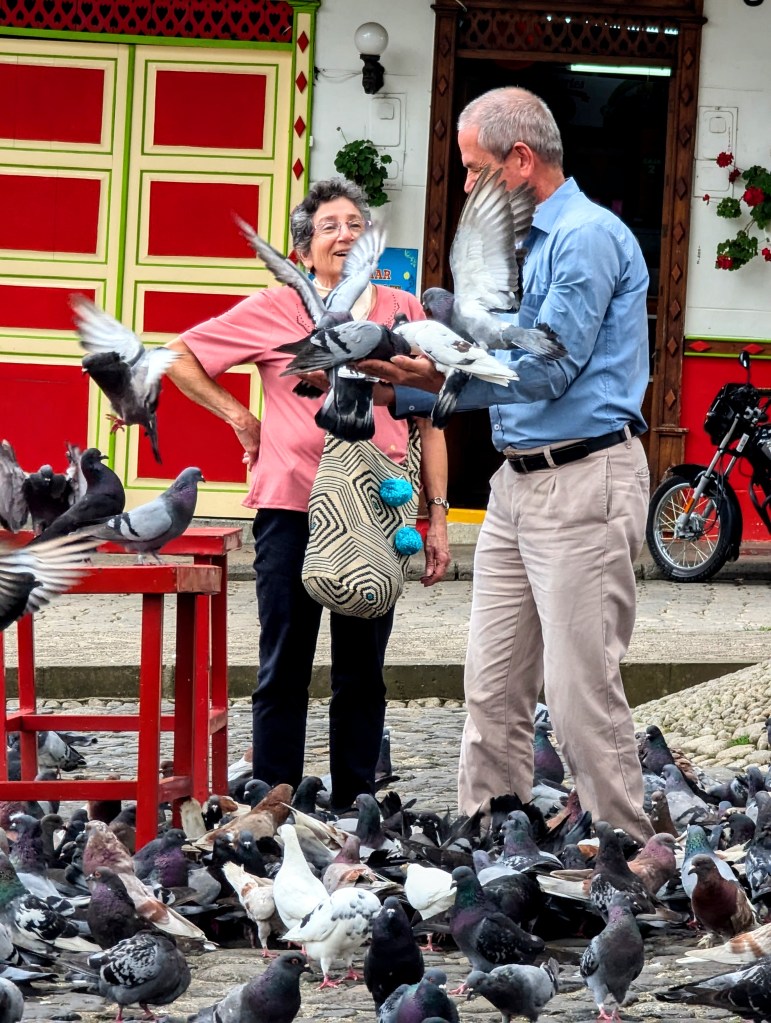
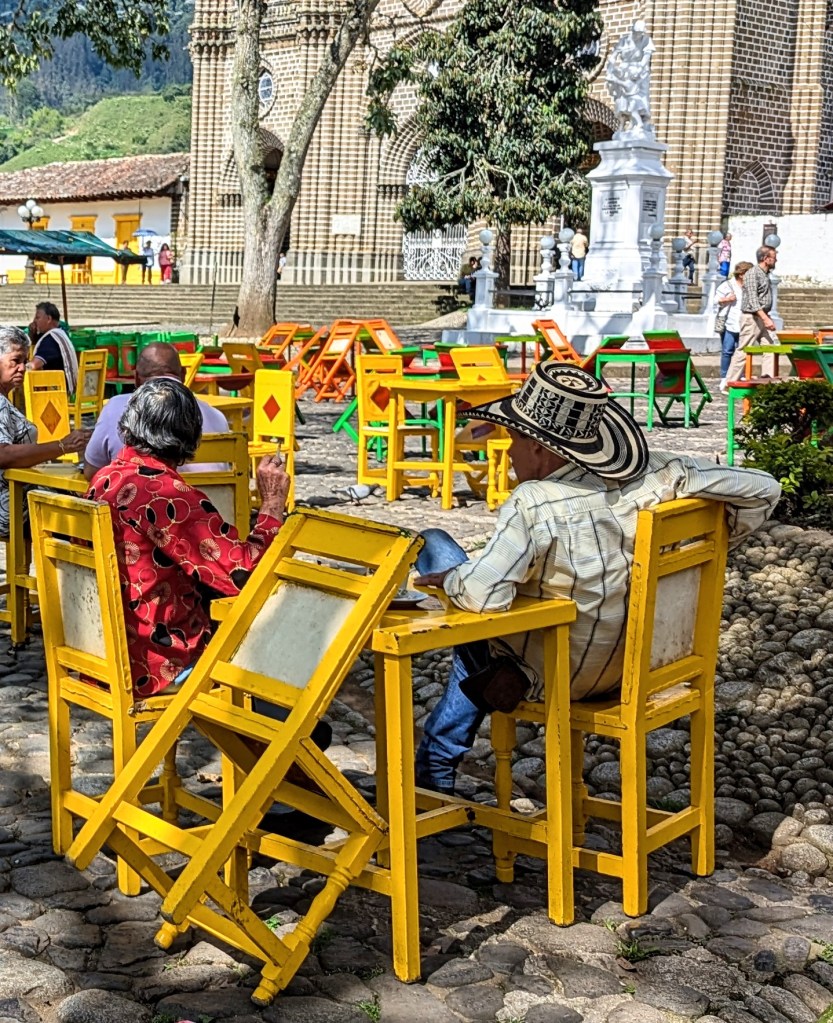
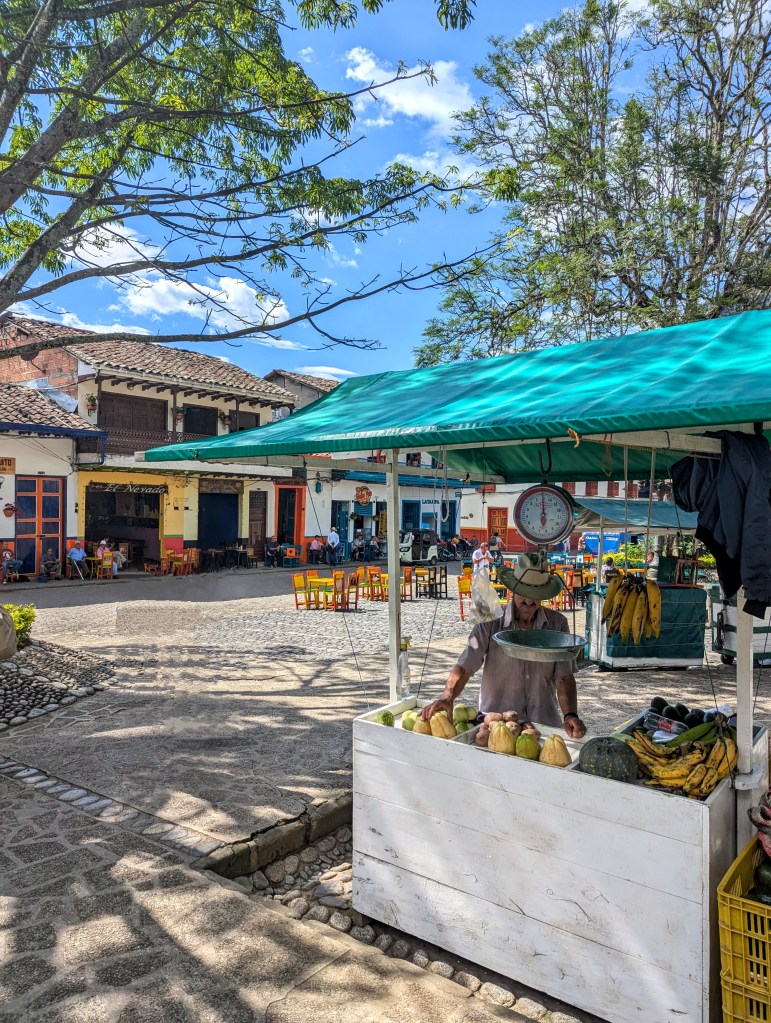
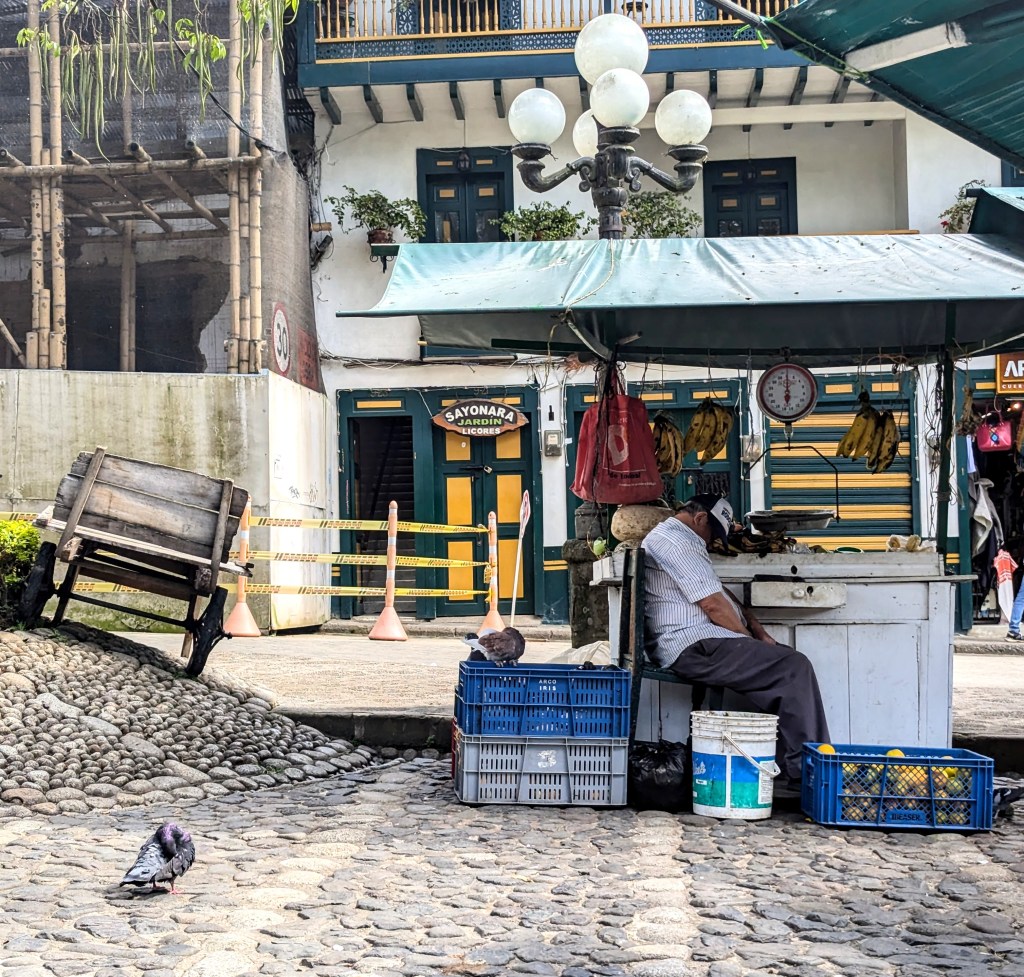
JARDÍN: Based only 3 hours by coach from Medellín, is my new favourite village in the world. You’re lucky I haven’t just decided to stay here. Although I have certainly considered it. I arrived and, even carrying 20kg of luggage, I was instantly happy and felt at peace. It’s very hard not to smile here. The one or two story houses are painted in beautiful pastel colours, as I write I can hear horses clip clopping down the street, the sun is shining, the town is surrounded by luscious mountains (full of wildlife and the beautiful, vibrant red, cock of the rock), everyone is friendly, even the cows, horses and pigeons are friendly. People sit along the streets and in the colourful main square watching the world go by. It’s clean, safe and there is a sense of pride in the town. And, probably most impactfully, there are hardly any tourists. It’s quiet and peaceful, exactly what I need, there is not loud Latin American music blasting from shops, restaurants or cars. There’s no constant horn blasting, with just the occasional jeep, tuk tuk or moped passing. It’s like a village from a fairytale. Everything here is wholesome, from feeding the pigeons every day to everyone leaving their front doors open. Someone even asked me to help them up the steps to the church, which I was overjoyed to do. It’s a town trapped in the past, for the better and there is no doubt I want to live here. My imagination is already planning setting up a natural mindfulness retreat here in the mountains, surrounded by forest and coffee plantations. Today I went for a cable car ride, although slightly different from those in Medellín, this one thankfully is now no longer made of wood as they have recently upgraded it to tin. Once on the other side, I had a lovely walk, petting horses, cows, and visiting a waterfall and bat cave, led by a lovely little local man called Mario, who is very proud of his cave. I saw a cock of the rock fly down in front of me, into the valley, it was magical. Tomorrow I am going on an adventurous hike to see 7 waterfalls and the day after that I am going on another, easier, hike to see a “splendid” waterfall.
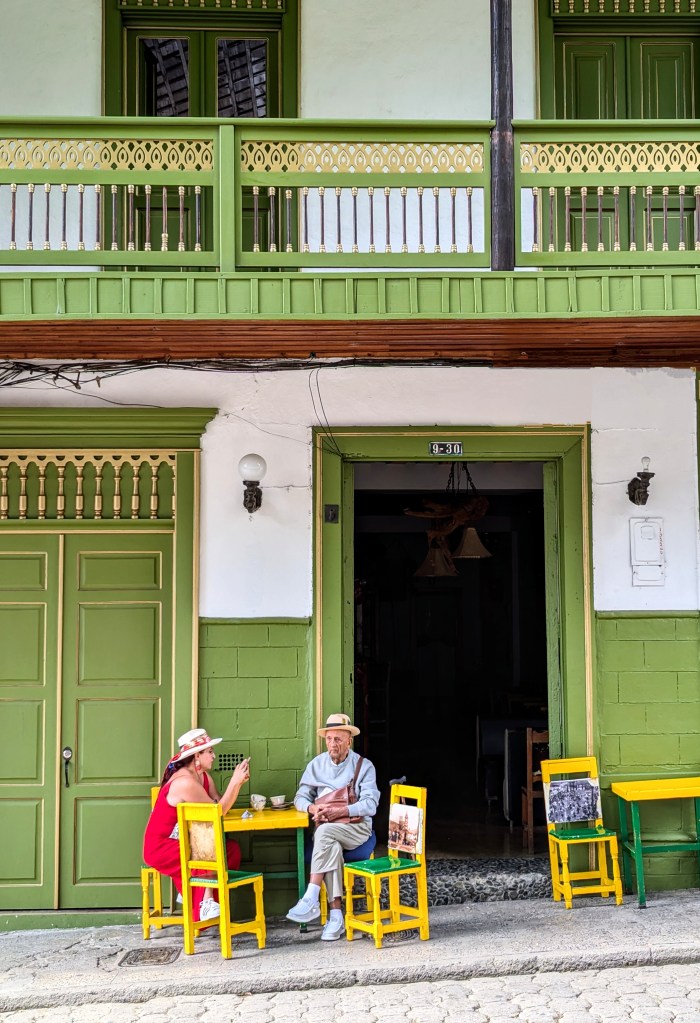
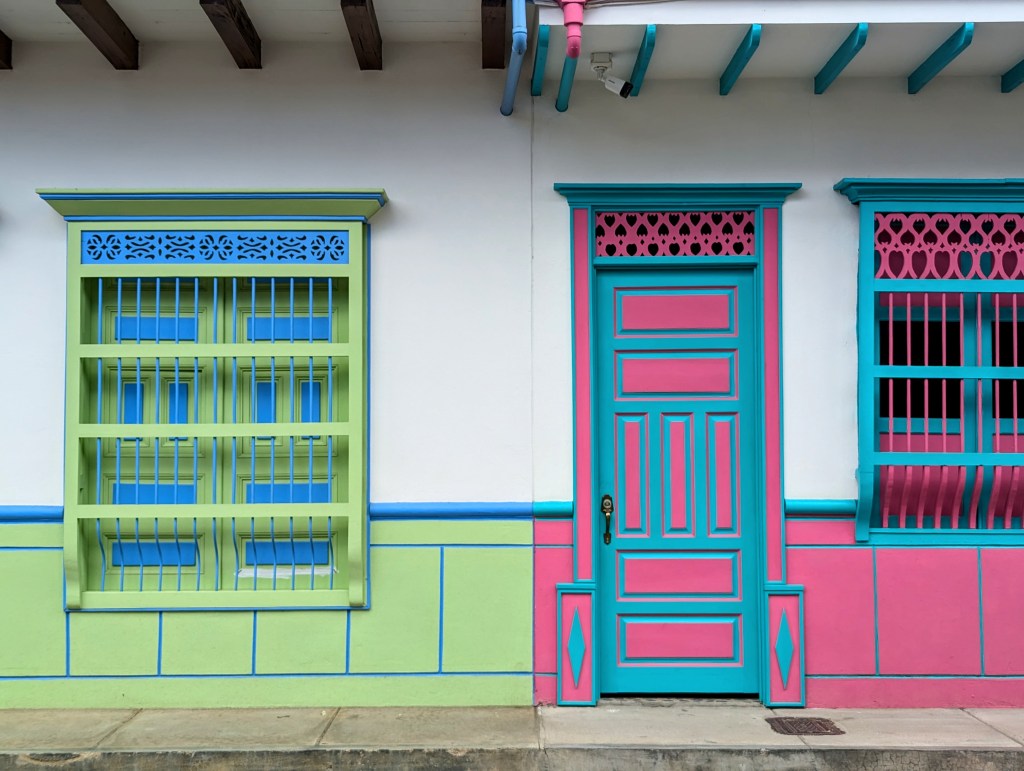
After two weeks of traveling and just going through the motions, I finally feel happy and at home here. Hopefully that feeling will continue as I head on to Cartagena and the rest of Peru and Bolivia. But I have a feeling a part of my heart will always be in this little idyllic Colombian village, that I will genuinely be devastated to leave behind.
My next, and last, letter will be written from Bolivia, only a few days before I head back to the UK. But before that, things I have learnt about Colombia: Colombia is better organised than Peru. Colombia is cleaner, it recycles, it doesn’t use single use plastic, it has health and safety, things like first aid boxes and, maybe even, risk assessments. Colombians like tourists. They want people to go away, having had a good time and tell other people how wonderful Colombia is. They are striving to rid themselves of the terrible reputation. And finally, Colombians love cheese. Not cheese like we think of cheese. I will quite happily eat a block of cheddar or devour a cheese board with some apple or grapes at Christmas. But Colombians put (soft white, not very flavourful) cheese with everything. Cheese in scrambled eggs, cheese on arepa, cheese in bread (practically every pastry or bread has cheese is), cheesy bread with a jam filling, sweet plantain with a cheese and jam filling, and most bizarrely cheese in hot chocolate….
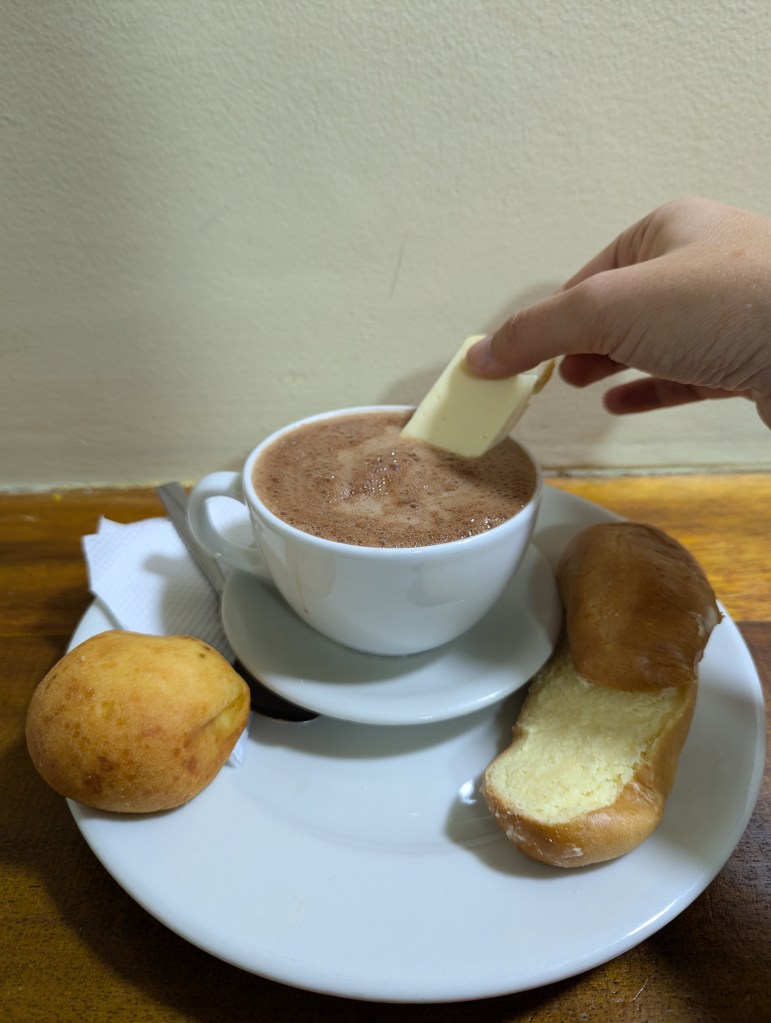
I hope you have enjoyed this penultimate letter, I will see you all soon. If I don’t come back, you know where to find me…
Lots of love,
Joss
xxx


 Connect with nature®
Leave a comment